HISTORY and influences OF community
The Community of St Columba is a contemplative and mystical society in the Celtic Christian Tradition. The influences of the community derive from both a Mystical Christian and Esoteric Order active in New Zealand since 1970 and key figures in the revival of Celtic Christian revival, in both of which the founding Guardian of the Society holds initiatory succession.
The apostolic succession of the founding Guardian of the Community traces back through the Dutch/German Old Catholic Church to the Roman Catholic Church, as well as Scottish Episcopal/Anglican and Celtic Orthodox Christian lines of succession, most notably going back to Jules Ferrette (1828-1904). Bishop Ferrette (Mar Julius) was a French ex Roman Catholic Dominican priest who founded the Ancient British Church (later named the Orthodox Celtic Church) after being consecrated 'Bishop of Iona' in Syria in 1866 by Ignatius Peter IV (Patriarch of Antioch and head of the Syrian Orthodox Church). Ferrette along with Welsh Anglican clergyman and Druid Richard Williams Morgan attempted to restore a form of ‘Neo-Celtic Christianity’ in Britain, which they claimed existed in a syncretistic, Druidic form prior to Augustine of Canterbury and the Synod of Whitby. Their approach has been described as “a mystical, nature-centred, contemplative, and holistic form of Christian faith and practice”. It is in that egregore and in the spirit of their vision of a Neo-Celtic Christian Church that the Community of St Columba continues.
Another key figure who we also trace descent from is Jean-Pierre Danyel (1917-1968) who was known as Bishop Tugdual. He was a member of Breton Gorssedd of Bards and was a Druid and a Monastic Hermit who significantly influenced the revival of Celtic Christian spirituality. In 1956 he founded the Holy Celtic Church in Brittany and on the site of his hermitage in Saint Doloy, was later established a Celtic Orthodox monastery that is still in existence today.
The Mystical and Esoteric order from which we descend traces its Christian influences back to the Franciscans of Sicily as well as the Rhineland Mystics of Germany. Later these merged with French and German mystical and esoteric traditions of the late 1800's.
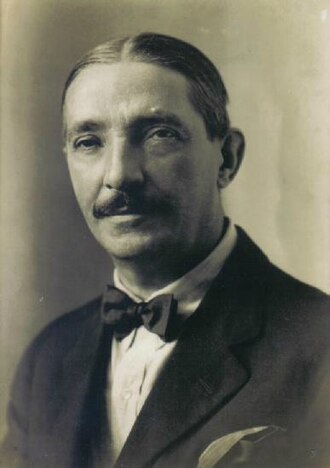
One of our predecessors in the Society was Mieczysław Demetriusz Sudowski, AKA Michael Sadau (1897-1971), a Polish Catholic esotericist who adopted the pseudonym 'Mouni Sadhu' (meaning Silent Monk). During his life he had been part of Rosicrucian group in Europe during the 1920's and studied various French and Russian esoteric traditions. Mouni Sadhu was greatly influenced by Paul Sedir (Yvon le Loup) and dedicated one of his books to him, while also translating Sedir's book "Initiations" from French to English. Sedir, had been a prominent French mystic, esotericist, and Bishop who played a central role in the late 19th Century French esoteric revival.
Sedir had a profound spiritual crisis after meeting a mysterious Christian Mystic named Monsieur Phillipe de Leon. He later gave up all titles, esoteric order activities and embarked on a path of deep Christian Mysticism following the 'way of the heart'. Mouni Sadhu later followed Sedir's lead and moved away from esoteric orders to a Mystical, devotional path. Later, he had ongoing correspondence with Christian mystic and Catholic Trappist Monk Thomas Merton, and Theosophists C.W. Leadbeater and Annie Besant and spent time staying at the Monastery of St Vincent de Paul in Paris and and at the headquarters of a Christian Mystical society (Les Amites Spirituelles) founded by Sedir. In 1949 Mouni Sadhu lived in India as a disciple of Ramana Maharshi at Arunachala, at the same time French Benedictine Monk Henri le Saux (Swami Abhishiktananda) was staying at the ashram. Le Saux co-founded the Shantivanam (Forest of Peace) Christian Ashram with another French Catholic Priest Fr Jules Monchanin one year later. The leadership of Shantivanam was later taken on by Camaldolese Benedictine Monk Bede Griffiths.
When Mouni Sadhu first met Ramana Maharshi he was mentored and introduced by a fellow Polish man, and fellow Theosophical Society member who had been a long-term close disciple of Ramana Maharshi and lifelong friend of Jiddu Krishnamurti. This was Maurice Frydman (sometimes spelled Freedman). Frydman, while Jewish by birth had become an Orthodox Christian monk living in a monastery, then later became an Engineer and was influential in Indian politics. Mouni was undoubtedly influenced by both Henri Le Saux and Frydman. He continued to write numerous, influential esoteric and spiritual books including on Tarot, Meditation, and Theurgy and immigrated to Melbourne, Australia in late 1949 where he resided until his death in 1971.
Michel Tyne Corbold (AKA Michael Freedman) joined the Melbourne sanctuary in 1959, and was a member of Mouni Sadhu's spiritual group. He had previously been a Methodist minister in Western Australia, and later became a renowned meditation teacher through his own training in India, where he resided for some time. Bede Griffiths three pillars 'Communion, Compassion and Cooperation' which represented the core framework for the evolution of humanity, as well as his emphasis on non-dual god consciousness, the sacredness of creation, inter-religious dialogue and respect, and a reverence for the Masculine AND feminine aspect of divinity were all adopted by Michael Freedman.
In 1967 Michael was made the new Senior Guardian of the esoteric society that he was part of and in 1969 he moved to Auckland, New Zealand with his wife Susan, where he worked as a Psychologist. He opened the "Sanctuary of the Angels" in a villa in the suburb of Mt Eden in 1970 and offered monthly seasonal rituals, a weekly 'Mystical Mass', esoteric study groups, meditation evenings, and spiritual retreats. Michael passed to higher service at Midsummer Eve, 20th December 1996. The Abbess of the esoteric order (an Anglican) and her husband (a Celtic Orthodox Priest) established a separate Celtic Christian Community which held seasonal ceremonies and eucharist services since the mid 1980's.
About The Guardian of the Society
The current Guardian, Ciaran Masterson, has been involved with the Celtic Christian and Druidic as well as Contemplative Mysticism for over 35 years. He was introduced to Michael Freedman, the Senior Guardian of a Mystical and Esoteric Order by his mother in 1991, then attended ceremonies and tuition at the Mt Eden Sanctuary until 1996. After Michael's death he continued his spiritual studies under other mentors and teachers and has led a ritual group of the Celtic Mystery Tradition for the last 25 years. On the 18th of June, 2016 he was invested as Senior Guardian of the Esoteric and Mystical Order by the previous Abbess and Prior.
Ciaran was previously an ordained priest in the Old Catholic/Liberal Catholic and French Mystical Christian traditions and offered Public Eucharist/Mass services for 10 years. Ciaran coordinates and leads the evening Celtic services, seasonal ceremonies, and contemplative meditation sessions and healing services. Professionally, he works as a Psychological Therapist in both the public sector and in private practice and has also been a University Lecturer. He has a strong interest in Ancient Mythology, Cultural Anthropology, World Religions, Psychoanalytic Psychotherapy, and Jungian Analytical Psychology.
While a Pakeha New Zealander by birth, Ciaran is of English/Welsh, Irish, and Scottish ancestry. He lives in Titirangi with his wife and two children and has led personal development and Christian Meditation groups, and conducted Celtic rites of passage (baby blessings, adult baptisms, weddings/hand-fasting ceremonies, and funerals) as a celebrant. He is also a registered counsellor who offers Spiritual Direction and Supervision.